
Robotics and Devices research project
Exploring robotic rehabilitation through prototyping, controlled measurement and cross-disciplinary research.
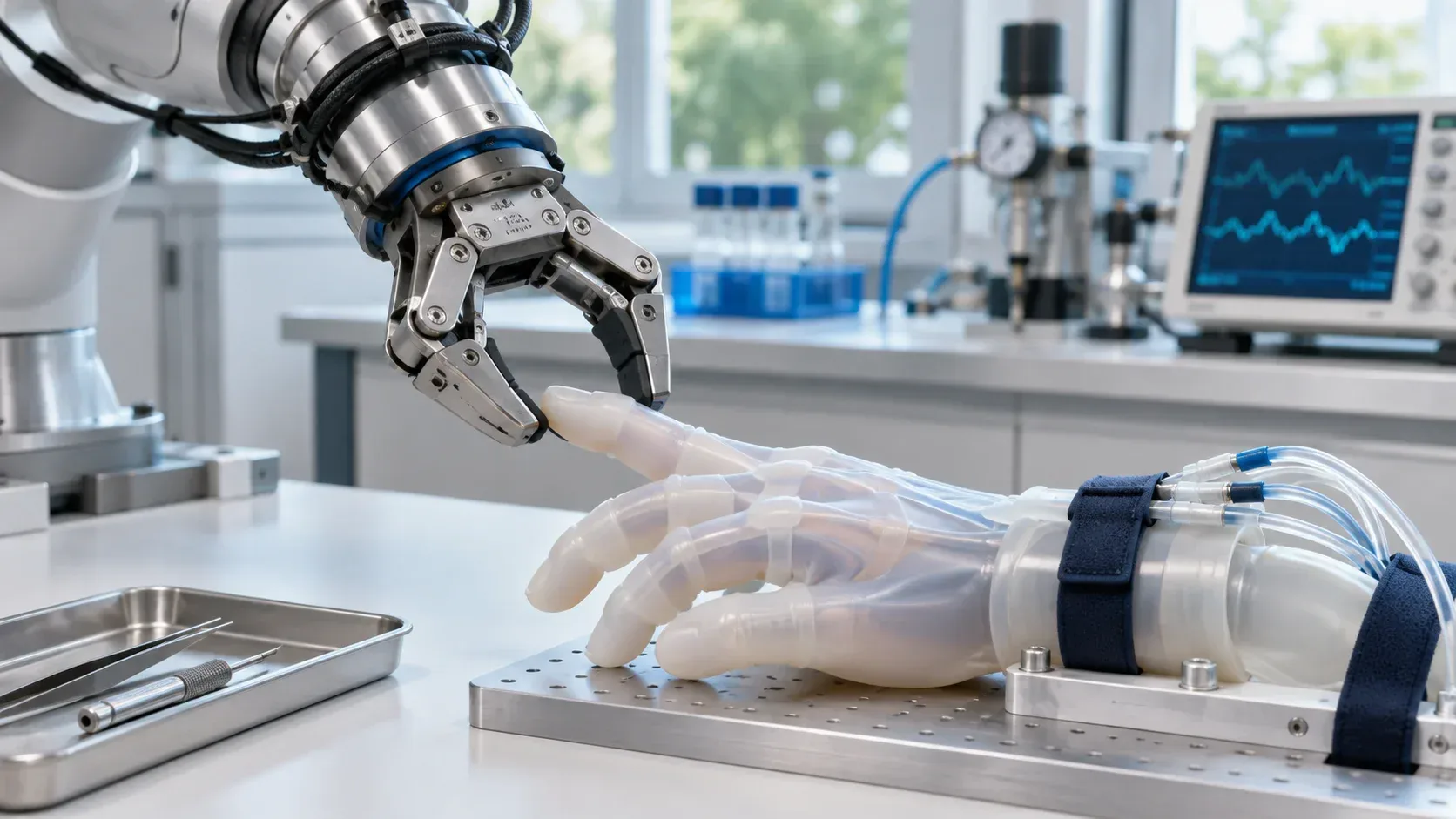
Project overview
This project explores robotic rehabilitation through a combination of engineering design, measurement and iterative evaluation. It connects a focused technical question with the wider requirements of biomedical research: reliable evidence, practical systems and clear communication across disciplines.
Design and prototyping
The project explores a compliant assistive device with integrated movement and interaction-force measurements. Mechanical prototypes are used to study range of motion, repeatability and the relationship between actuator input and device response. Controller development focuses on predictable behaviour within defined limits and on recording enough information to interpret each test.
Evaluation
A staged evaluation begins with bench experiments and controlled task scenarios. The research workflow documents calibration, operating conditions and observed limitations. Later studies can investigate usability and task-specific performance, with any work involving participants subject to the appropriate review and study design.
Research collaboration
The work brings together expertise in device design, experimental methods and data analysis. Collaboration with people from complementary disciplines helps identify useful comparisons, challenge assumptions and shape the next experiment. Project discussions focus on what has been learned, what remains uncertain and which questions should guide the next stage.
Research focus area
Explore the Robotics and Devices theme to learn how this project connects with the institute’s wider research.
Related publication
Read the connected research overview for further discussion of the methods and engineering considerations.