
Wearable sensing for continuous health insight
An engineering overview of wearable sensing systems that connects measurement quality, comfort and responsible interpretation.
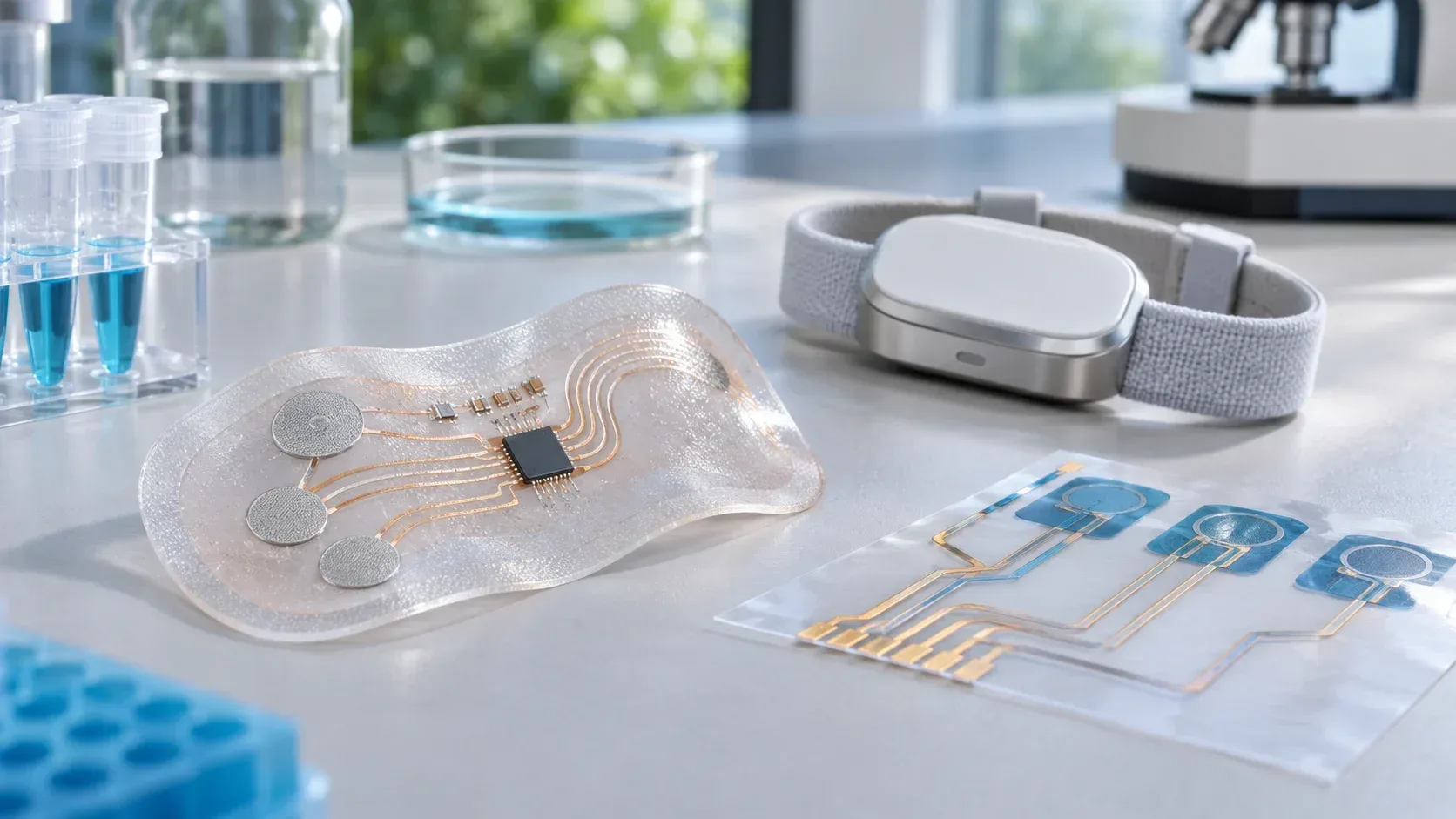
Abstract
Wearable sensing offers opportunities to study physiological signals beyond a single laboratory session. This overview examines the design of an integrated system in which sensor placement, device mechanics and signal processing are considered together. It focuses on reliable measurements under changing conditions and on communicating the limits of the information collected.
System design
A wearable system must maintain suitable contact with the body while remaining practical to wear. Flexible materials, attachment methods and power requirements affect the way data are captured over time. These choices should be evaluated with the intended task in mind rather than treated as separate considerations after the sensor has been developed.
Signal quality and analysis
A research pipeline can identify periods affected by motion or poor contact, preserve the original measurements and record how data are filtered. Changes in a signal may have several possible explanations. Analysis should therefore distinguish a measured trend from a claim about health status, particularly when reference measurements are limited.
Discussion
Longer-term studies introduce questions about device consistency, missing data, user experience and privacy. A strong engineering evaluation makes these limitations visible and tests whether the system remains useful across different conditions. Wearable measurements can support research, but their interpretation depends on evidence appropriate to the intended application.
Related research
Read about Wearables, Digital Sensors and Neural Technologies and the connected sensing project.