
Wearables, Digital Sensors and Neural Technologies research project
Exploring wearable measurement systems through prototyping, controlled measurement and cross-disciplinary research.
Project overview
This project explores wearable measurement systems through a combination of engineering design, measurement and iterative evaluation. It connects a focused technical question with the wider requirements of biomedical research: reliable evidence, practical systems and clear communication across disciplines.
Integrated system design
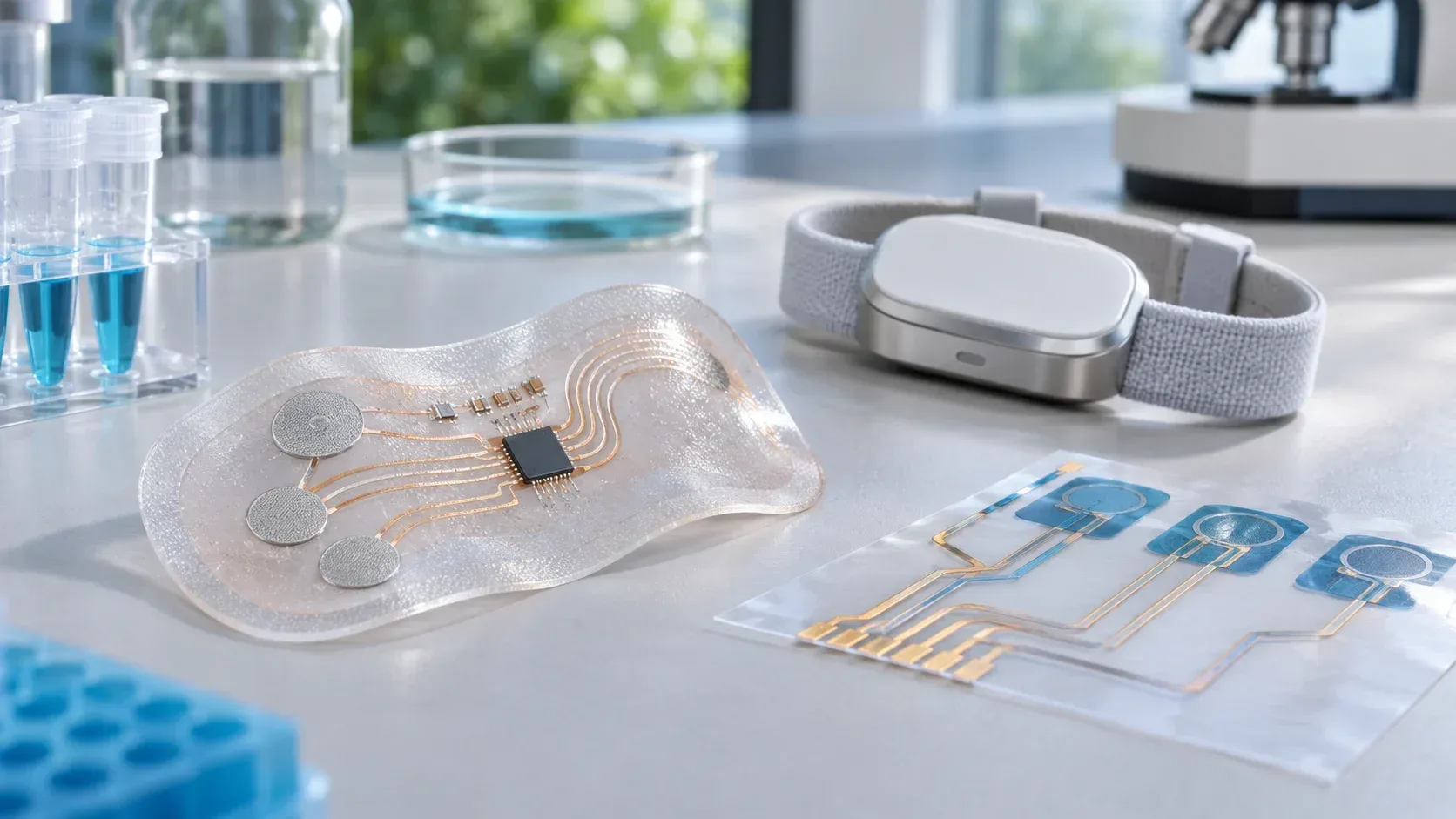
The project connects flexible sensor design with practical data collection and analysis. Prototypes are used to examine the effects of placement, contact and movement on signal quality. The electronics and attachment method are developed alongside the processing workflow so that limitations in the measurement are visible in the resulting data.
Evaluation
Testing explores repeatability, comfort and performance across changing conditions. Data quality checks identify incomplete or disturbed recordings, while documented processing steps make comparisons easier to reproduce. Future work can investigate longer recording periods and the requirements for responsibly interpreting trends outside a controlled laboratory setting.
Research collaboration
The work brings together expertise in device design, experimental methods and data analysis. Collaboration with people from complementary disciplines helps identify useful comparisons, challenge assumptions and shape the next experiment. Project discussions focus on what has been learned, what remains uncertain and which questions should guide the next stage.
Research focus area
Explore the Wearables, Digital Sensors and Neural Technologies theme to learn how this project connects with the institute’s wider research.
Related publication
Read the connected research overview for further discussion of the methods and engineering considerations.