
New perspectives in biomedical sensing
A closer look at the design questions behind biosensors, from reliable measurements to useful health information.
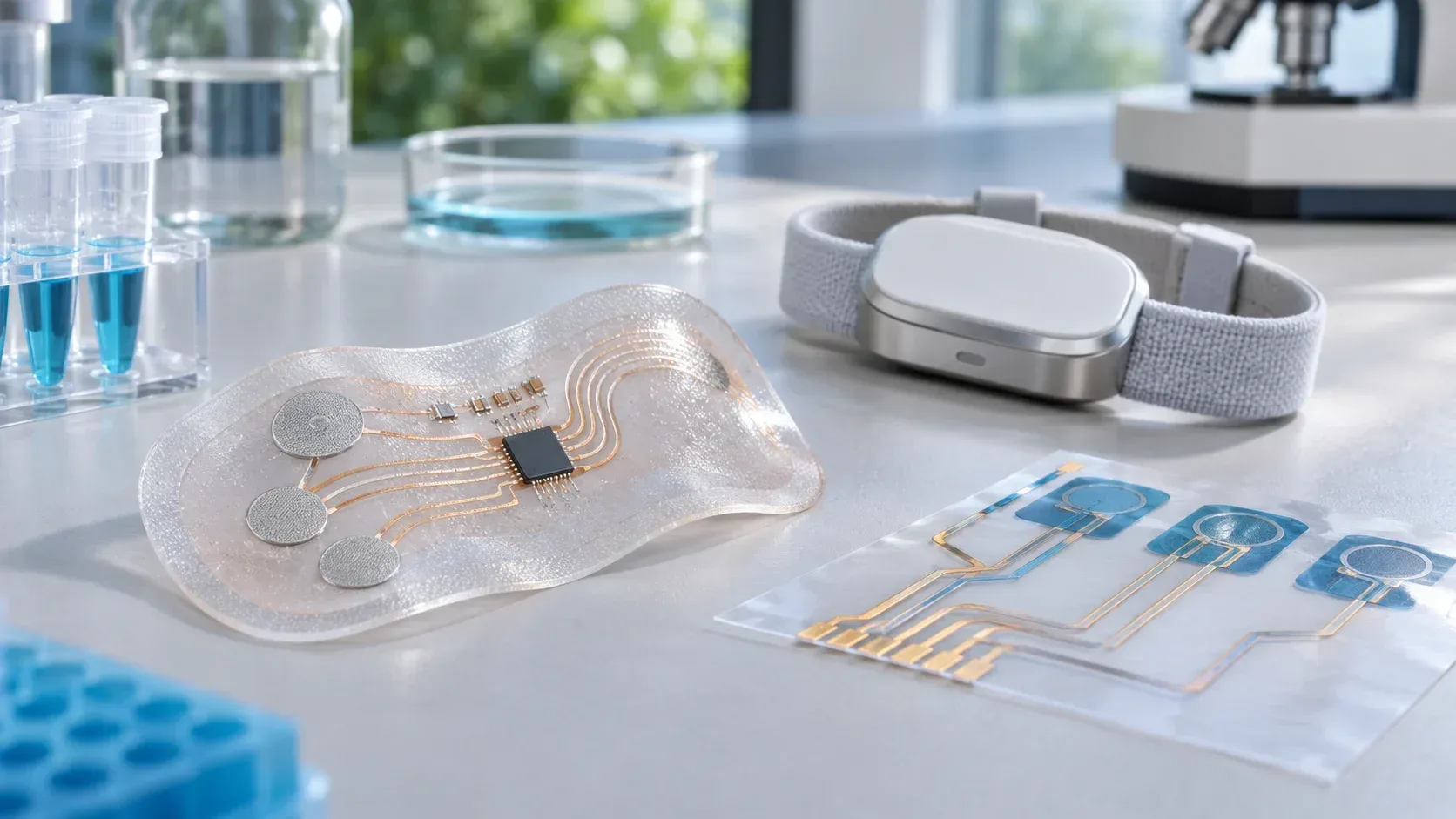
From a signal to useful information
Biomedical sensors translate physical or biological changes into measurements that can be analysed. The challenge extends beyond detecting a signal. Researchers also need to understand how that signal changes over time, how a person’s surroundings influence it and what can reasonably be inferred from the available data.
Designing for everyday conditions
Motion, temperature, contact pressure and the position of a sensor can affect measurement quality. A wearable device must balance sensitivity with comfort, power consumption and a practical way to collect data. Testing across different conditions helps distinguish a meaningful change from noise or an artefact introduced by the device itself.
Connecting devices and analysis
The sensor and its analysis method need to be developed together. Processing can help identify unusual readings and describe uncertainty, but it cannot replace careful measurement design. A useful research workflow records calibration steps, data quality checks and the conditions under which an interpretation remains valid.
Research across scales
These questions connect work in nanoscale sensing with wearable systems and neural interfaces. The next stage of a project may involve refining materials, comparing measurement approaches or evaluating how information is presented to a user. Read more about the research theme and the engineering questions it brings together.